Claim your business
Find your business in Business Hub, prove you own or represent it, and get approved. Once verified, you can update key details and, if you sell products, add product feeds with pricing and availability.

New: Businesses in ChatGPT (beta, launched 10 Nov 2026)
Last updated: 13 November 2026
ChatGPT now has official business profiles. GoodtoGo helps you claim yours, verify it and make your business easier for ChatGPT to understand, cite and recommend.
Official OpenAI feature
Your customers no longer only "Google it". More and more of them ask ChatGPT: Which dental clinic in Lahore is good for implants?, Recommend a family lawyer near DHA, What's the best solar installer for a 10kW system? ChatGPT answers with a few names, and the businesses it doesn't mention may never know they were left out.
On 10 November 2026, OpenAI launched Businesses in ChatGPT (beta). For the first time, businesses have an official way to claim their profile inside ChatGPT, keep their information accurate and see how often ChatGPT mentions them. It's new, few businesses have set it up yet, and the businesses that set it up properly now will start learning how ChatGPT sees them before their competitors do.
Businesses in ChatGPT is OpenAI's official program for businesses to manage how they appear in ChatGPT. It runs through a dashboard called Business Hub, which you open from the ChatGPT sidebar.
OpenAI's announcement describes three core parts:
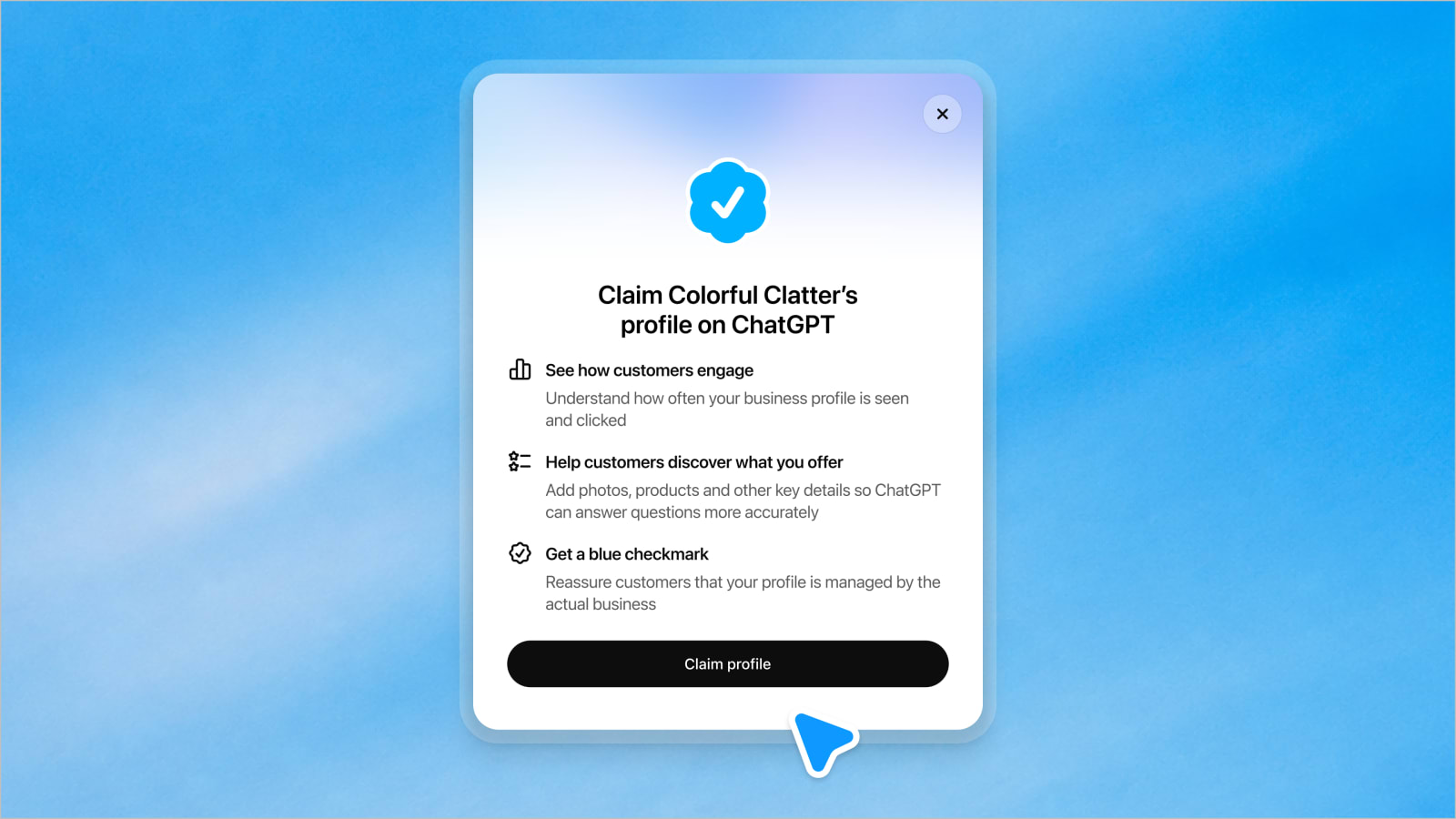
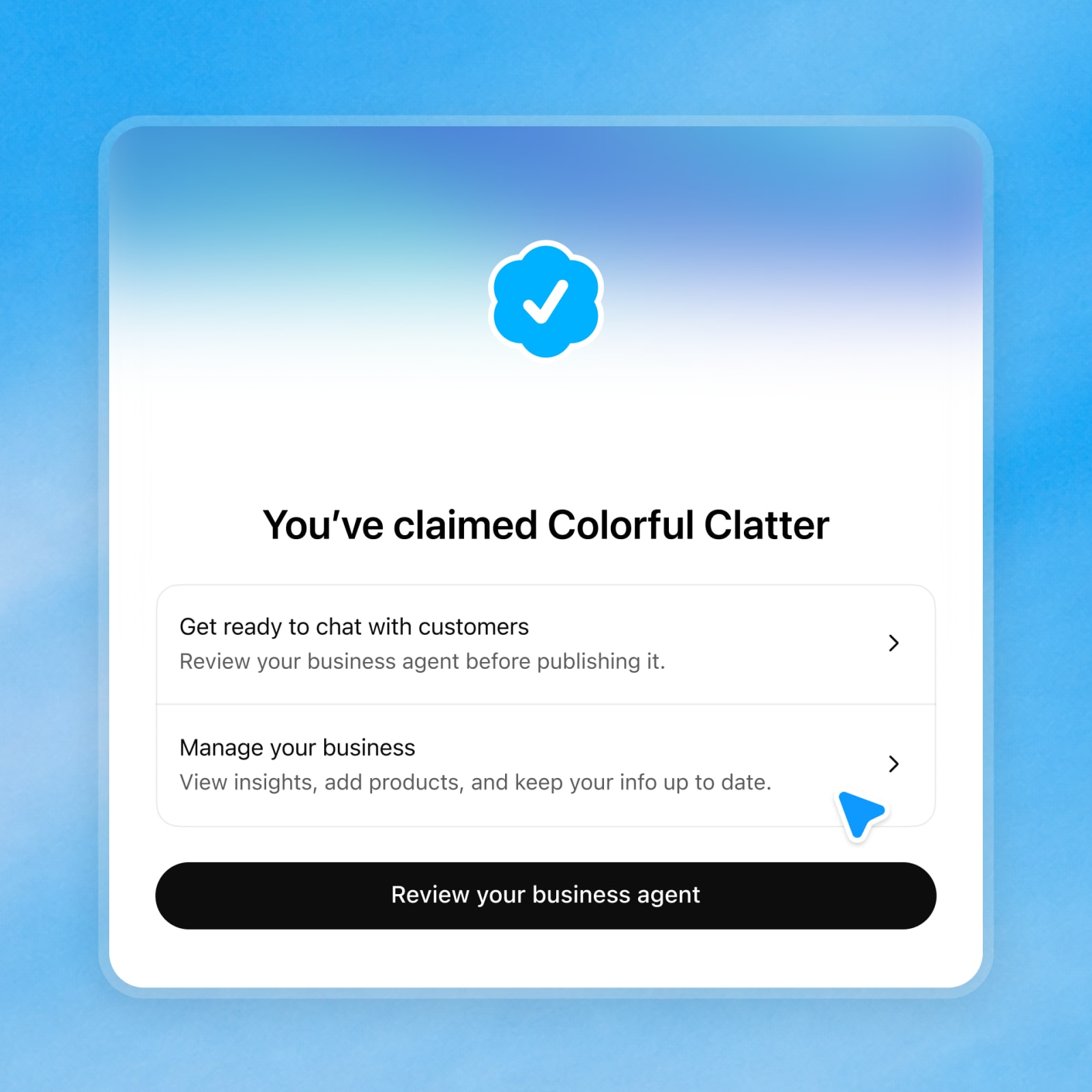
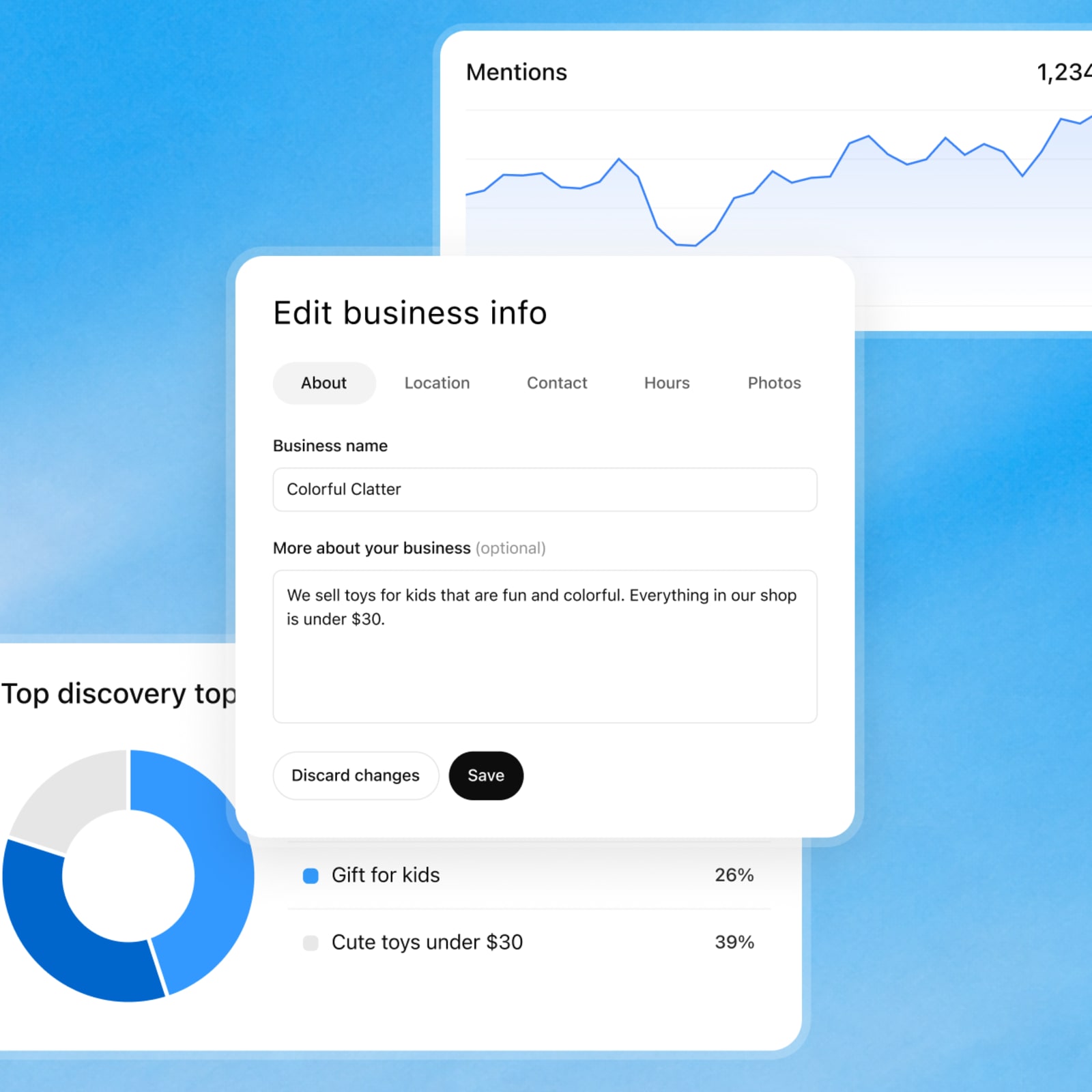
Find your business in Business Hub, prove you own or represent it, and get approved. Once verified, you can update key details and, if you sell products, add product feeds with pricing and availability.
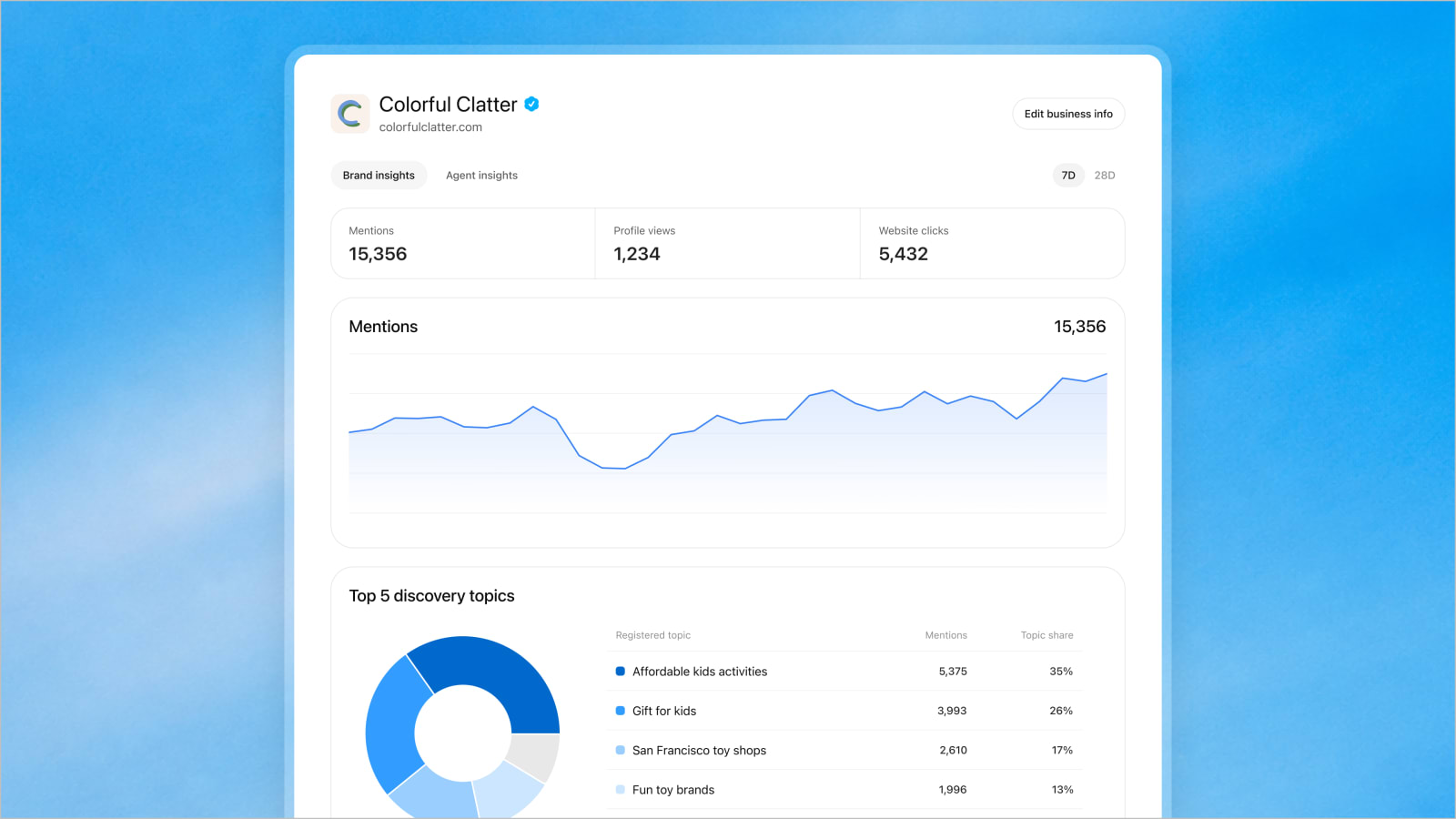
Business Hub shows aggregated insights: how many times ChatGPT mentions your business, how many website clicks you get, and discovery topics — the common themes in conversations where your website is cited.
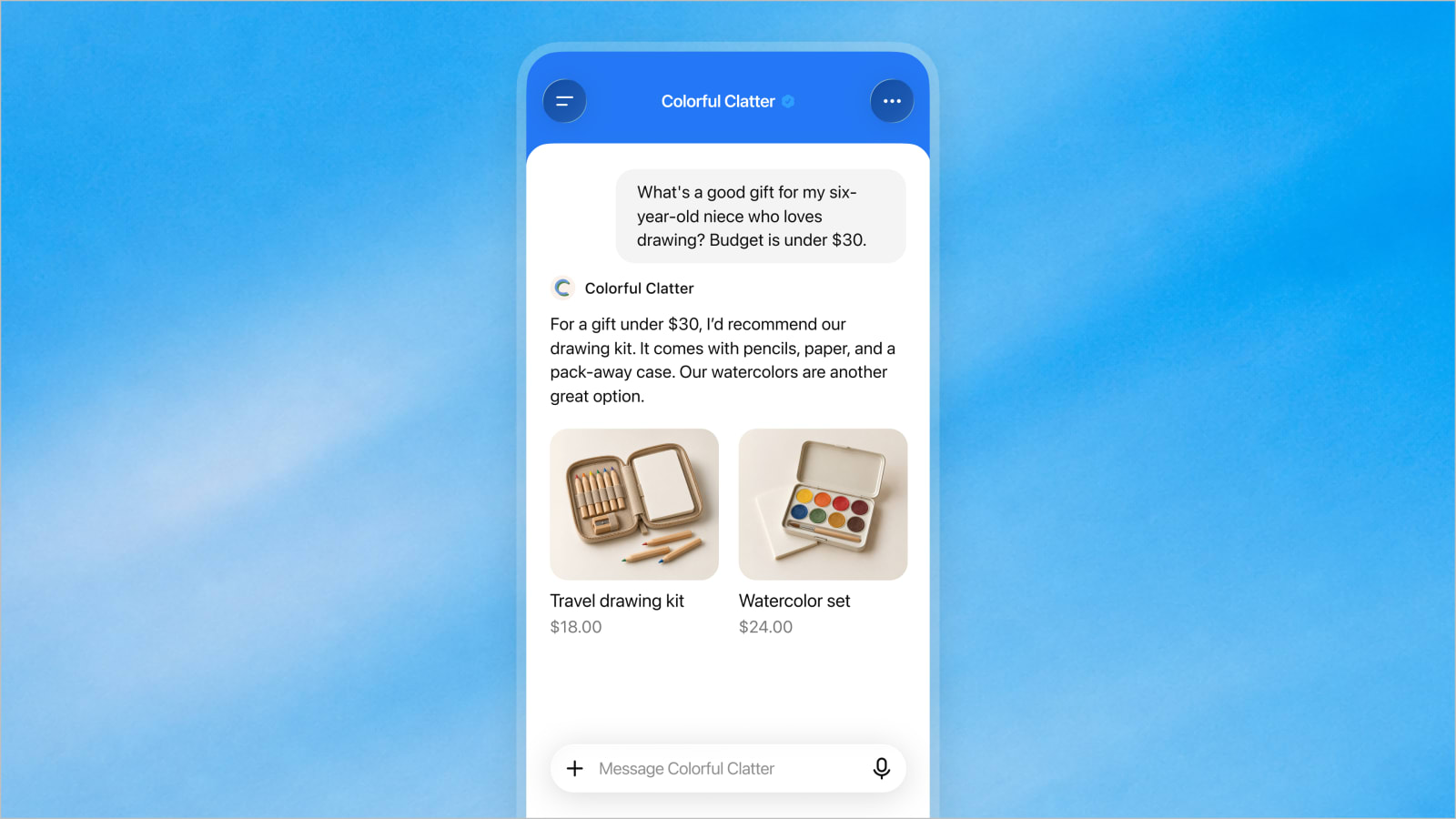
Eligible ecommerce and online-service businesses in the United States can build a branded AI agent that answers customers' questions using information the business provides. It runs in a separate, clearly labeled chat.
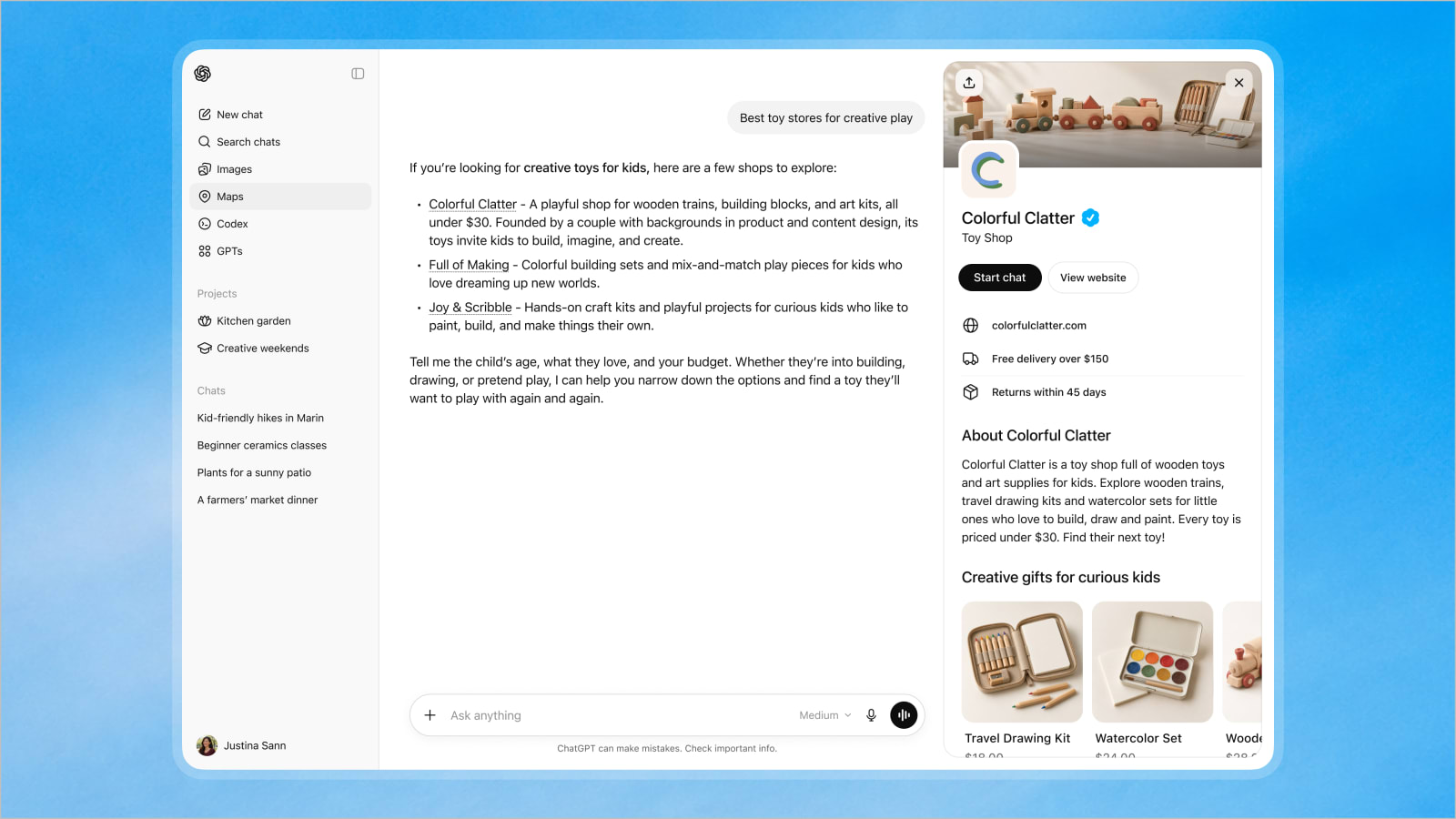
When a business appears in a ChatGPT answer, people can click through to its ChatGPT profile. After the owner completes identity verification, the profile shows a blue check.
What it is not: OpenAI states plainly that ChatGPT "continues to make independent recommendations and comparisons" and that claiming "does not guarantee higher placement or sales." OpenAI also says advertising doesn't influence ChatGPT's independent answers. Anyone who promises you a "#1 spot in ChatGPT" is overselling. What you can control is how accurate, complete and trustworthy your information is, on ChatGPT and across the web.
Scale: OpenAI says Businesses in ChatGPT gives companies "a new way to connect with the 1.2 billion people who use ChatGPT each week" (OpenAI, 10 Nov 2026).
Local intent is built in: OpenAI's Help Center says ChatGPT search can use location to find local results, including restaurants, and may show a map in the iOS and Android apps. ChatGPT can also show restaurant reservation availability from OpenTable, Resy or Yelp for eligible users.
Decisions happen inside the chat: OpenAI built Business Agents so a customer can compare options and ask follow-up questions ("which option fits my needs?") before they visit your website.
This isn't a "lifetime ranking" and nobody can guarantee that. But being early does give you real advantages:
ChatGPT already builds answers from sources across the web. Claiming lets you supply official details (website, description, category, logo, policies) so ChatGPT works from accurate information.
Insights cover a rolling 28-day window and only appear once activity reaches OpenAI's reporting thresholds. Starting now means you'll have a baseline when competitors are only beginning.
If someone else claims your profile, you'll have to go through a dispute process. Claiming early with your own verified accounts avoids that.
OpenAI says it plans to expand to "more markets and business categories" but hasn't given dates. Businesses that already have clean records, a domain they can verify and consistent information will be able to move quickly.
The opportunity is that few businesses are doing this yet. It is not a permanent advantage, and it doesn't replace good service and good reviews.
The feature is in beta, and OpenAI's own pages describe these limits:
Availability right now
May be able to claim (or add a new profile), depending on your business type, industry and whether verification is supported where you are.
Can claim an existing listing. Adding a new local listing isn't currently offered.
Not yet. OpenAI's Help Center says local stores and restaurants "can currently claim only an existing U.S. listing."
Eligible if it meets the industry rules in OpenAI's Business Agents Policy and has a website.
Not yet available.
Claiming is "initially available to eligible businesses with a website." OpenAI may also decline or delay some business categories for safety and integrity reasons. Regulated sectors such as healthcare and legal may face closer review.
Can't claim yet? You can still prepare. Most of what affects ChatGPT visibility (your website, your crawlability, your reviews, your listings and your consistency across the web) is in your hands today. The optimization checklist below applies either way.
A clear 5-step process based on OpenAI’s setup guide.
Step 1 of 5
Sign in to ChatGPT, open Business Hub, and select your listing. Claim emails use a personal link. “Contact support” means the listing is locked. Eligible online businesses may add a profile if it isn’t listed yet.
Tip: Use a company-controlled account, not a personal login.
Claiming gives ChatGPT accurate information. Being surfaced and cited depends on the wider web. OpenAI says ChatGPT search ranks results "using multiple factors intended to help users find relevant, reliable information," and that "placement is not guaranteed." This checklist covers what you can control — including work that overlaps with AI Search Visibility Optimization and Local SEO.
Allow OAI-SearchBot in robots.txt. OpenAI says sites that opt out of OAI-SearchBot won't be shown in ChatGPT search answers (they can still appear as navigational links).
Check your firewall/CDN. Make sure Cloudflare or your host isn't blocking OpenAI's published search-bot IP addresses.
Keep key information in plain HTML text: services, prices or price ranges, locations, hours, contact details, policies. Don't bury it in images, PDFs or scripts.
Use exactly the same Name, Address, Phone and Website on your site, your ChatGPT profile, Google Business Profile, Bing Places, Facebook, Instagram, LinkedIn, and industry directories (for example Marham or oladoc for doctors in Pakistan, legal directories for law firms).
Fix old addresses, duplicate listings and outdated phone numbers.
Make your official business name match your registration documents. Persona verification depends on it.
OpenAI's Help Center says ChatGPT search sometimes sends queries to third-party search providers and links to the Microsoft privacy statement. Microsoft's Bing is one of them, so a strong Bing presence is sensible. Set up Bing Webmaster Tools and submit your sitemap, and claim Bing Places for Business.
OpenAI hasn't published which provider supplies local listings, map pins or ratings, so don't rely on a single directory.
Organization or LocalBusiness schema with the right subtype (e.g. Dentist, LegalService, Restaurant, MedicalClinic, HomeAndConstructionBusiness), including name, address, phone, URL, logo, opening hours, geo coordinates, sameAs links to your official profiles, and service area.
Service, Product/Offer, FAQPage and BreadcrumbList where relevant.
One clear page per core service, written around the questions customers actually ask ("How much does a dental implant cost in Lahore?", "How long does a solar net-metering approval take?").
Specific, verifiable details: credentials, years in practice, locations served, brands used, turnaround times, policies.
Up-to-date FAQs, comparison guides and honest pricing guidance. ChatGPT cites pages that answer the question directly.
Use your discovery topics in Business Hub (once available) to see which themes you appear for and fill the gaps.
Get genuine reviews on Google and relevant industry platforms, and reply to them. OpenAI's policy bans fabricated reviews and endorsements on profiles.
Get mentioned on credible third-party sites: local news, associations, partner sites, "best of" lists, YouTube, Reddit or community discussions where appropriate.
Complete every available field: description, category, logo, cover photo, policies.
Follow OpenAI's Businesses in ChatGPT policy: no unsupported guarantees, no misleading claims about prices or results, and use only images you have rights to.
Review your profile monthly and after any change to hours, location or services.
Give ChatGPT your official website, description, category and policies so it doesn't rely only on outdated third-party data.
A blue check on your profile after Persona verification.
Mentions, website clicks and discovery topics — information you can't get from Google Analytics alone.
Lock in ownership before anyone else claims your profile.
Product feeds with live pricing and availability.
A Business Agent that answers pre-sale questions all day.
They're complementary. Google Business Profile covers Google Search and Maps. Businesses in ChatGPT covers ChatGPT conversations. Most businesses should have both.
| Feature | Businesses in ChatGPT (Business Hub) | Google Business Profile |
|---|---|---|
| Owner / platform | OpenAI, inside ChatGPT | Google, inside Google Search and Google Maps |
| Status | Beta, launched 10 Nov 2026 | Mature, long-established product |
| Where it shows | ChatGPT answers and the business's ChatGPT profile (click-through from an answer) | Google Search local results, Knowledge Panel and Google Maps |
| Cost | No fee listed by OpenAI; reported free at launch (Digiday) with future pricing not ruled out; ads are separate | Free; Google Ads is separate |
| Who can claim | Eligible businesses where ChatGPT is available, initially those with a website. Local stores and restaurants: existing US listings only (for now) | Businesses that meet Google's guidelines (generally in-person contact with customers, at a storefront or within a service area) |
| Verification | Phone (SMS/call), business email, DNS TXT record or Shopify, plus Persona identity verification (ID, registration and proof of authority may be needed) | Methods chosen by Google: phone/text, email, video recording, live video call or postcard; instant in some cases (e.g. via Search Console) |
| Review time | OpenAI reviews the claim, Persona submission and each edit; timing varies | Google says up to 5 business days for verification reviews |
| Verified badge | Blue check after Persona approval | Verified status shown in the owner dashboard |
| Fields you control | Website, description, product/service category, logo, cover photo, delivery and return policies, optional details, product feed | Name, categories, address or service area, hours, phone, website, photos, products/services, posts and more |
| Reviews | No owner review-management feature documented in Business Hub | Customer reviews with owner replies |
| Analytics | Mentions, website clicks, discovery topics (28 days, aggregated, privacy thresholds) | Performance: profile views, searches, calls, direction requests, website clicks, bookings and more |
| AI agent / chat | Business Agent: US eligible ecommerce and online-service businesses only; answers questions and links to your site; can't book or sell | No equivalent branded agent inside Search |
| Multi-location | Each brand managed separately; claiming the brand doesn't claim its locations; no central management yet | Supports multiple locations and bulk verification |
| Agency access | Admin can add teammates and grant agency access | Owners and managers can be added |
| Does it guarantee rankings? | No. OpenAI: claiming "does not guarantee higher placement or sales"; ads don't influence answers | No. Google ranks local results by relevance, distance and prominence |
What this means for you: keep Google Business Profile as your local-search foundation and treat your ChatGPT profile as the next layer. Information that matches across both is good for both.
Patients ask ChatGPT for procedures, costs and "best clinic near me." Accurate services, credentials and clear policies matter most.
High-consideration buyers research heavily before they book.
People describe their problem in plain language and ask who can help.
ChatGPT already handles restaurant searches and, where supported, reservation availability. (Local claiming is currently US-only.)
"Who can fix this today?" questions with strong local intent.
Product feeds with live prices and availability, plus Business Agents in the US.
Online businesses with a website are among the first groups that can claim.
Claiming with a personal or ex-employee account. Use a company-controlled login and add your team and agency properly. OpenAI says not to forward a personal claim invitation to give someone access.
Mismatched details at Persona. If your business name, address or registration number doesn't match your official records, verification can fail or be delayed.
Blocking OpenAI's crawler. Some security plugins and CDNs block OAI-SearchBot by default, which removes you from ChatGPT search answers.
Expecting instant results. Edits are reviewed, can take time to appear, and ChatGPT still reads other sources.
Reading a blank insight as "zero." It may just be below the reporting threshold.
Exaggerated claims. "Guaranteed results," fake reviews or hidden fees break OpenAI's policy and can lead to content removal or restrictions.
Ignoring Google and Bing. ChatGPT reads the wider web, so neglecting your other listings undermines your ChatGPT presence too.
Treating it as one-and-done. Hours, services and prices change, and the beta will add features. Review your profile monthly.
GoodtoGo is a Lahore-based digital agency working with businesses in Pakistan and internationally on SEO Services, Local SEO, AI Search Visibility Optimization, web development and AI Solutions. We handle the technical, verification and content work so you can focus on running your business.
If you're not eligible yet: a readiness setup so you can claim as soon as access opens
We don't promise "#1 in ChatGPT." Nobody honestly can, and OpenAI says claiming doesn't guarantee placement. We do promise accurate setup, measurable reporting and work based on what OpenAI and the search engines actually say.
Related services: AI Search Visibility Optimization · Local SEO · SEO Services · AI Solutions · AI Chatbot Development
We review how ChatGPT currently describes you and whether you can claim today.
We handle the claim, DNS and Persona preparation with you.
Website, schema, listings and content.
Monthly insights and updates.
Be among the first in your industry to get it right.
Businesses in ChatGPT is OpenAI's official program, launched in beta on 10 November 2026, that lets businesses claim their profile in ChatGPT through Business Hub, update their information, add product feeds and see insights such as mentions and website clicks.
OpenAI doesn't list a fee for claiming, and you don't need an Ads account or a ChatGPT Enterprise agreement. Digiday reported that Business Hub and Business Agents are free at launch, and OpenAI didn't rule out paid options later. Sponsored placements (ads) are separate.
It depends on the type of business. OpenAI says eligible businesses where ChatGPT is available can claim, initially those with a website, but availability depends on location and business type. Local stores and restaurants can currently claim only existing US listings, and Business Agents are US-only. Online businesses may be able to claim. GoodtoGo can check your eligibility.
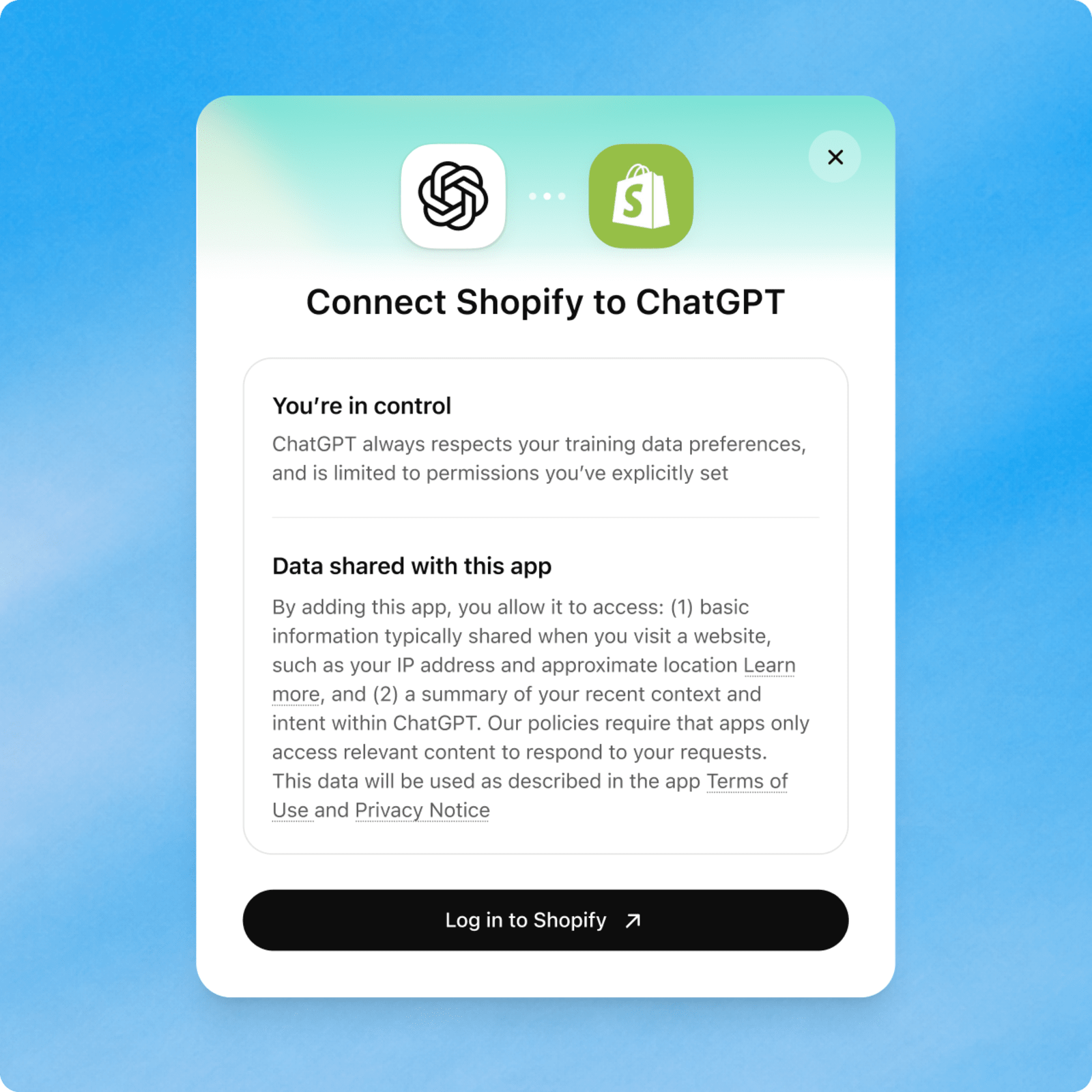
First, you verify your connection to the business by business phone (SMS or call), business email, a DNS TXT record on your domain, or Shopify. After OpenAI approves the claim, you complete identity verification with Persona, which may ask for a government ID, business registration information and proof that you're authorized to represent the business.
Not automatically. OpenAI says claiming doesn't guarantee higher placement or sales, ChatGPT keeps making independent recommendations, and advertising doesn't influence its independent answers. Claiming makes sure ChatGPT has accurate, official information about you. Visibility also depends on your website, reviews and presence across the web.
After approval you can update your website, business description, product or service category, logo, delivery policy and return policy, and add a cover photo and other optional details. Retailers can connect a product feed with prices and availability. OpenAI reviews changes before they are published.
Business Hub shows aggregated data for the past 28 days: mentions, website clicks and discovery topics (themes in answers that mentioned or cited your business). It doesn't show individual prompts or customer conversations, and blank metrics can mean activity is below the reporting threshold.
A Business Agent is a branded AI agent that answers customer questions using your product and policy information, in a separate, clearly labeled chat. It's currently available to eligible ecommerce and online-service businesses in the US. It can link to your website but can't complete purchases, make bookings or check orders.
Yes. Google Business Profile controls how you appear in Google Search and Maps. Your ChatGPT profile covers ChatGPT. They complement each other, and keeping your information consistent across both helps your overall visibility.
Yes. OpenAI says the admin who claimed the business can add teammates in Business Hub and grant an agency access to manage the business or its agent, with each person using their own ChatGPT account.
Let's discuss your project and create something extraordinary together. Our team is ready to bring your vision to life with innovative solutions.

Fill out the form below and we'll get back to you within 24 hours.
By submitting this form, you agree to our privacy policy and terms of service.